
JobBoardAI for Smarter Job Search and Career Opportunities
Finding a suitable job involves more than searching for vacancies. Job seekers need to identify relevant roles, evaluate employer requirements, prepare applications, and determine whether an opportunity aligns with their skills and career goals. Artificial intelligence (AI) can support parts of this process by helping people analyse job descriptions, organise information, and prepare application materials.
JobBoardAI is a name associated with AI-powered job searching, but its specific capabilities should be verified against the actual platform. Understanding how AI can support recruitment and job discovery provides a useful starting point for evaluating its potential value.
The Future of AI-Assisted Job Searching
JobBoardAI can refer to an AI-assisted approach to finding jobs and exploring career opportunities. Depending on the specific platform, its features may include job discovery, candidate matching, application assistance, or other recruitment-related tools.
AI has several established applications in recruitment. For example, LinkedIn documents how AI-powered recruitment tools can help employers identify candidates, compare qualifications with job requirements, and review applicant information.
For job seekers, AI-assisted tools may help interpret job descriptions, identify relevant skills, and organise a job search. However, these benefits depend on the tools available, the information provided, and the accuracy of their outputs.
Before relying on JobBoardAI for a particular task, check its official website to establish which features it actually offers, how its services work, and whether any functions require a paid subscription.
How Can JobBoardAI Support Your Job Search?
AI-assisted job search tools can contribute to several stages of the application process. Their usefulness depends on the specific capabilities available and how effectively job seekers apply the results.
Discover Relevant Job Opportunities
Searching for suitable vacancies requires clear criteria, including job title, required skills, experience level, location, and employment type.
A job search platform may help users narrow their options through filters, search functions, or personalised recommendations. Where AI-powered matching is available, it may also help connect a candidate’s stated qualifications with relevant job requirements.
However, recommendations are only as useful as the information behind them. Review each vacancy’s responsibilities and eligibility criteria rather than assuming that a recommended position is automatically a good fit.
Compare Job Requirements With Your Skills
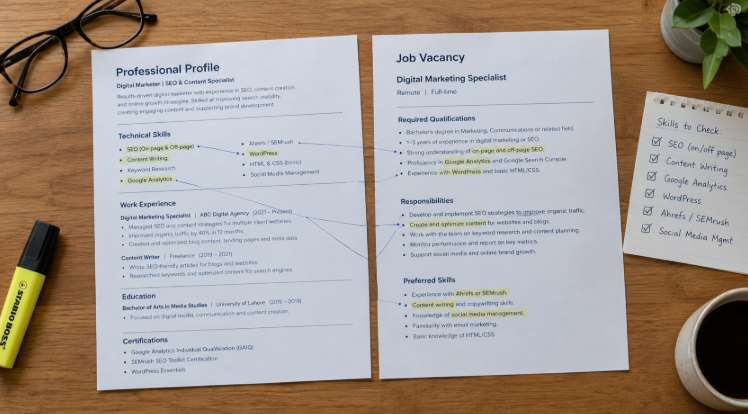
Job descriptions provide information about the qualifications, experience, and competencies employers expect from candidates.
AI-assisted analysis can help organise these requirements into categories, such as technical skills, professional experience, educational qualifications, and communication abilities. Comparing these categories with your existing experience can help identify strengths and areas where further development may be necessary.
This comparison should remain evidence-based. A tool can identify similarities between a resume and a job description, but it cannot independently establish that a candidate is qualified for every aspect of a role.
Prepare More Relevant Applications

A resume should present the experience and achievements most relevant to the position being advertised. Sending the same generic document for every vacancy can make it harder for employers to identify the candidate’s suitability.
AI writing tools may help reorganise resume sections, improve clarity, and identify relevant information that deserves greater emphasis. LinkedIn’s Resume Tips documentation describes a feature that reviews an existing resume against a job description and suggests potential improvements.
Use these suggestions as a starting point rather than accepting every recommendation. Check that the revised resume accurately represents your qualifications, preserves important details, and uses language that reflects your actual experience.
Explore Different Career Paths
People considering a career change may need to understand unfamiliar job titles, transferable skills, and the qualifications expected in a new industry.
AI tools can help summarise job descriptions, compare roles, and identify recurring skill requirements across vacancies. This information can support initial career research and help users develop more focused learning plans.
Nevertheless, an AI-generated career suggestion is not proof that a particular occupation offers strong employment prospects or suits an individual’s circumstances. Verify important details through employer websites, professional associations, and reliable labour-market information.
Organise a More Efficient Job Search
Applying for jobs involves several recurring tasks, including researching employers, tracking application deadlines, updating resumes, and preparing for interviews.
Where suitable functionality is available, AI-assisted tools may help reduce repetitive work by summarising information or drafting initial application materials. Candidates can then spend more time evaluating opportunities and preparing for the requirements of specific roles.
Efficiency should not come at the expense of accuracy. Review every application before submitting it, particularly when AI has generated descriptions of your experience or suggested answers to employer questions.
Who Can Benefit From JobBoardAI?
The potential value of an AI-assisted job search depends on a person’s experience, objectives, and the platform’s actual features. Several groups may find these tools useful.
Recent Graduates
Recent graduates may need help identifying entry-level positions and understanding the qualifications employers expect.
AI-assisted tools can help organise job requirements, explain unfamiliar terminology, and identify skills worth highlighting from academic projects, internships, or previous employment.
Graduates should still confirm whether vacancies accept candidates with limited professional experience and whether the stated educational requirements match their qualifications.
Experienced Professionals
Professionals seeking a new position may need to compare responsibilities, evaluate opportunities for advancement, or move into a different organisation.
AI-assisted analysis can help compare job descriptions and identify how existing experience relates to a potential role. It may also help organise professional achievements into a clearer resume structure.
The final decision should account for factors that automated matching may not adequately evaluate, including compensation, working conditions, management responsibilities, and long-term career objectives.
Career Changers
Changing industries often requires identifying which existing skills transfer to a new occupation and which additional competencies may be necessary.
AI tools can help compare job descriptions across industries and summarise recurring qualification requirements. This can make preliminary research more structured and help candidates identify relevant training opportunities.
Before committing to a career transition, verify qualification requirements and investigate the actual responsibilities of the roles you are considering.
Remote Job Seekers
People looking for remote work need to distinguish between fully remote positions, hybrid arrangements, and jobs that require occasional office attendance.
Where a platform supports relevant filters, candidates can narrow searches by work arrangement, location restrictions, and other eligibility criteria.
Remote listings also require careful verification. Confirm the employer’s identity, check the vacancy on the company’s official careers page where possible, and investigate any unexpected requests for money or sensitive personal information.
How to Get Better Results From an AI-Assisted Job Search
Using AI effectively requires more than entering a job title and accepting the first set of recommendations. A structured approach can help you identify relevant opportunities and prepare stronger applications.
Define Your Target Role
Start by identifying the positions you want to pursue. Consider your existing skills, experience, qualifications, preferred industry, location, and employment requirements.
A clear target makes it easier to assess whether a vacancy is relevant. If your search is too broad, you may spend time reviewing positions that do not match your experience or objectives.
Use Relevant Search Terms
Job titles and skill requirements vary between employers, even when the underlying responsibilities are similar.
Research alternative titles for your target role and identify the skills commonly mentioned in relevant vacancies. Use these terms to refine your searches, but do not add qualifications or competencies to your resume unless you genuinely possess them.
Tailor Your Resume to Each Application
Review the job description before submitting your application. Identify the most relevant requirements and prioritise experience that demonstrates your ability to meet them.
Indeed’s guidance on tailoring a resume explains how candidates can align their application with a position by highlighting relevant qualifications, skills, and achievements.
Where appropriate, use AI to improve wording or organise information. Keep all claims accurate, preserve your own professional voice, and include measurable achievements when you can substantiate them.
Verify AI-Generated Information
AI-generated content can contain inaccurate statements, misleading recommendations, or details that do not apply to a particular employer.
Check job titles, qualification requirements, company information, salary figures, and application instructions against reliable sources. Never allow an AI tool to invent experience, credentials, or achievements on your behalf.
Protect Your Personal Information
Job seekers should verify vacancies and recruiters before sharing sensitive information.

The US Federal Trade Commission warns that job scams may involve fake recruiters, fraudulent vacancies, requests for upfront payments, or attempts to obtain personal and financial information.
Be cautious if someone promises a job without a credible recruitment process, pressures you to pay for employment, or requests banking details before a legitimate offer and onboarding process.
For additional protection, verify the vacancy directly with the employer and review the FTC’s official guidance on recognising job scams.
Frequently Asked Questions
What Is JobBoardAI?
JobBoardAI is a name associated with AI-assisted job search and recruitment. The precise services and features depend on the specific platform operating under that name and should be confirmed through its official website.
Can JobBoardAI Help Me Find a Job?
An AI-assisted job search platform may help users research vacancies, assess job requirements, or prepare application materials if those functions are available. However, using such a platform does not guarantee employment. Hiring decisions depend on factors including qualifications, experience, application quality, and employer requirements.
Is JobBoardAI Suitable for Beginners?
It may be useful for beginners if the platform offers accessible job discovery tools, relevant search filters, or application assistance. New job seekers should first verify the available features and then use them to support their research and application preparation.
Can AI Help Me Improve My Resume?
AI tools can help review resume wording, organise information, and compare your experience with a job description. However, their suggestions may contain inaccuracies. Check every recommendation and ensure your resume accurately represents your skills, qualifications, and achievements.
How Can I Improve My Chances of Getting Hired?
Focus on positions that match your qualifications, tailor your resume to the advertised requirements, and demonstrate your achievements with specific evidence. Research employers before applying and prepare for interviews by reviewing the responsibilities and competencies associated with the role.
Is It Safe to Use AI Job Search Platforms?
Safety depends on the platform’s legitimacy, privacy practices, and the information you provide. Research the service, review its privacy policy, and understand how it handles uploaded resumes and personal information. Verify job offers independently and never pay someone simply for the promise of employment.
Final Thoughts
AI-assisted job searching can help candidates organise their research, compare job requirements, and prepare more relevant applications. Its value depends on the quality of the information provided, the accuracy of the results, and the features available on the chosen platform.
For anyone considering JobBoardAI, the first step is to verify the platform’s actual capabilities. Use any available AI assistance to support your decision-making, confirm important information through reliable sources, and ensure every application accurately reflects your experience and qualifications.